Startups
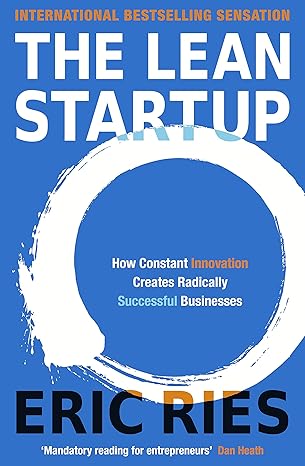
The Lean Startup: The Million Copy Bestseller Driving Entrepreneurs to Success
A systematic approach to building products people actually want. No fluff, just frameworks tested across hundreds of ventures.
A systematic approach to building products people actually want. No fluff, just frameworks tested across hundreds of ventures.
Most startup advice oscillates between vague inspiration and overly specific tactics. The Lean Startup: The Million Copy Bestseller Driving Entrepreneurs to Success occupies the valuable middle ground: reusable mental models that work across industries, stages, and business models.
Written by practitioners who have built, failed, and succeeded repeatedly, this book distills patterns that separate products people love from those they tolerate. You will learn how to validate assumptions before committing resources, design experiments that yield actionable data, and make decisions under profound uncertainty.
The frameworks presented here have been tested across consumer apps, enterprise software, hardware products, and service businesses. They have guided companies from first prototype to sustainable revenue. More importantly, they have prevented countless expensive mistakes by helping founders ask better questions earlier.
This is not a book about raising venture capital or growth hacking. It is about the fundamental thinking required to build something people want badly enough to pay for. Whether you are launching your first product or your fifth, these frameworks provide clarity when everything else feels chaotic.
You have an idea and technical skills but lack experience in product development methodology. This book provides the structured thinking you need to move from concept to validated product efficiently.
You are responsible for product success but struggle with prioritization and validation. These frameworks help you make confident decisions about what to build and when.
Your initial product has traction but you are planning new features and extensions. The frameworks help maintain product discipline as complexity increases.
You are launching new products within established organizations and need to balance startup agility with corporate realities. These principles adapt to constrained environments.
What you will learn and be able to apply immediately
Learn to distinguish between problems worth solving and interesting ideas that lack market urgency. Master techniques for validating problem severity before writing code.
Identify and test your riskiest assumptions systematically. Understand which beliefs must prove true for your product to succeed and how to validate them cheaply.
Design experiments that answer specific questions with minimum time and resource investment. Move beyond building full products to test hypotheses incrementally.
Interpret user feedback accurately. Learn to distinguish genuine interest from polite encouragement and identify which metrics actually predict product success.
Know when to persist and when to change direction. Understand the types of pivots available and how to execute them while maintaining momentum.
Make intelligent decisions about where to invest limited time and capital. Learn to balance building, measuring, and learning across multiple work streams.
"The most common mistake founders make is not building something nobody wants. It is building something people want but discovering this too late, after burning through resources on the wrong implementation. Effective startup thinking front-loads validation and back-loads execution. You earn the right to build only after proving people will value what you create."
This book provides the frameworks you need to build products with confidence and clarity.